

The wind had been blowing for three days straight, the way it does in the Little Karoo when the season turns, relentless, the kind of wind the old farmers simply call by name because a thing this persistent deserves one.
Oom Koos, had long ago named this one Moriah.
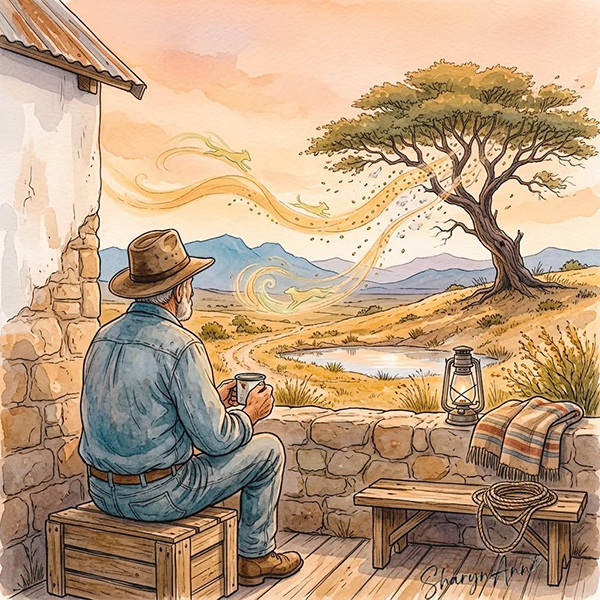
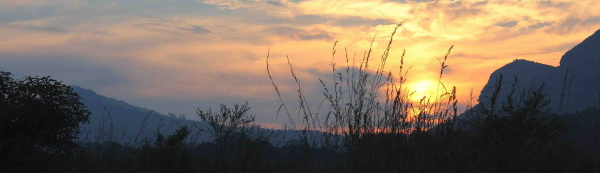
He sat on the lee side of the stoep wall, out of her worst temper, watching the dust rise off the far lands in long golden ribbons, twisting and turning like something alive and herded, and he supposed, in a way, it was.
He had seen them first as a young man, though he had never told a soul: small, quick shapes moving within the wind itself, the force behind the dust rather than the dust itself, darting low along the ground like sheepdogs working a flock too wide and wild to ever fully gather.
He called them, in the private language a man keeps for himself, ”𝙙𝙞𝙚 𝙬𝙞𝙣𝙙𝙬𝙚𝙧𝙠𝙚𝙧𝙨” The wind herders.
They did not walk. They rode Moriah’s long breath the way a hawk rides a thermal, tucked into her currents, and their work, as far as he could tell in fifty years of watching, was never finished and never idle. They gather what the land let loose: seeds shaken free from dried pods, dust lifted from a hundred camps, the fine silver fluff of dead khakibos. They drive it all before them across the vast, indifferent distances of the Little Karoo.
He watched one small shape peel off from the rest that afternoon, low and fast along his boundary fence, herding a scatter of something he had no name for toward the gap in the ridge that led, eventually, three farms over, to where his daughter Retha, now lived with a husband and two children Oom Koos had met only a handful of times.
He had often wondered what rode out with Retha the day she left, beyond the boxes in the bakkie. He had simply stood at the gate and let his love follow her the only way it could, over the ridge and down the long dusty road, unasked and unanswered.
Moriah gusted hard against the house, rattling the tin roof, and Oom Koos thought of his own father, dead these thirty years, who had planted a single kameeldoring tree on the ridge above the dam the year Koos was born. The wind had taken its seeds every season since, scattering them onward, and now there were kameeldorings on farms whose owners had no idea where the first tree ever stood, no notion that a man long dead had put something of himself into ground he would never see, carried there by a wind that asked no permission and expected no thanks.
That, Oom Koos thought, is how it goes with anything worth keeping. It rarely stays where you planted it.
He had always believed the wind was simply weather, an inconvenience to be endured, a thing that dried the dams and cracked the lips and made a man old before his time. But watching the windwerkers work that evening, driving seed and dust and the fine invisible residue of a hundred lives toward horizons he would never walk himself, he wondered if the wind had ever been weather at all. Perhaps it had been, all along, the oldest kind of messenger the Karoo had ever employed, carrying forward what the land itself refused to let end at a fence line.
By the time the sun dropped and Moriah’s temper eased into the low, steady murmur she kept for night, ”𝘁𝗵𝗲 𝘄𝗶𝗻𝗱𝘄𝗲𝗿𝗸𝗲𝗿𝘀” had settled too, folded perhaps into her breath itself, waiting for tomorrow’s gusts to begin the herding again.
Oom Koos sat a long while in the settling dark, his coffee gone cold, thinking of his daughter three farms over, and the kameeldoring trees scattered further than any man could count, and the wife he had lost, whose love, he was only now beginning to understand, had never stayed contained to the borders of this one small farm either.
There is something the wind has always known that we, in our small and rooted lives, forget: 𝗻𝗼𝘁𝗵𝗶𝗻𝗴 𝘁𝗵𝗮𝘁 𝗶𝘀 𝘁𝗿𝘂𝗹𝘆 𝗼𝘂𝗿𝘀 𝗲𝘃𝗲𝗿 𝘀𝘁𝗮𝘆𝘀 𝘄𝗵𝗲𝗿𝗲 𝘄𝗲 𝗹𝗲𝗳𝘁 𝗶𝘁.
Love, like seed, like dust, like the fine invisible thread of a life well lived, does not respect fences or distance or even death. It rises on currents too faint to see, carried by hands, or winds, we will never meet, and it lands, eventually, somewhere far beyond our knowing, and takes root anyway.
Grief, and sometimes even life itself, teaches us to measure our legacy by what we can see: the child who stayed, the tree that grew where we planted it, the love that remained close enough to touch.
Yet it is Moriah, and the tireless windwerkers riding her endless breath, who ask us to embrace something wider: that what we give freely to this world will always travel further than our own eyes can follow.
It settles far past every horizon we know, and takes root in ground, and in people, we will never meet, keeping some small part of us alive in places we could never have imagined reaching.
𝗔 𝘀𝗺𝗮𝗹𝗹, 𝗰𝗼𝗺𝗳𝗼𝗿𝘁𝗶𝗻𝗴 𝘁𝗵𝗼𝘂𝗴𝗵𝘁 𝗳𝗼𝗿 𝘆𝗼𝘂, 𝗺𝘆 𝗹𝗼𝘃𝗲:
May you find that the love you have given is never confined to the ground beneath your feet. May you feel it, carried onward by winds that move unseen, landing in lives far beyond your own horizon. May the small unexplainable things, the seed that sprouts where none was planted, the tree that grows on a stranger’s land bearing fruit you’ll never taste, the sudden warmth of a memory that arrives from nowhere, remind you that everything you have loved is still travelling, still landing, still becoming someone else’s beginning.
A legacy that is never yours to hold. Only yours to release.
A Story from the Mountain, Little Karoo · South Africa
SharynAnn
The wind had been blowing for three days straight, the way it does in the Little Karoo when the season turns, relentless, the kind of wind the old farmers simply call by name because a thing this persistent deserves one.
Oom Koos, had long ago named this one Moriah.
He sat on the lee side of the stoep wall, out of her worst temper, watching the dust rise off the far lands in long golden ribbons, twisting and turning like something alive and herded, and he supposed, in a way, it was.
He had seen them first as a young man, though he had never told a soul: small, quick shapes moving within the wind itself, the force behind the dust rather than the dust itself, darting low along the ground like sheepdogs working a flock too wide and wild to ever fully gather.
He called them, in the private language a man keeps for himself, ”𝙙𝙞𝙚 𝙬𝙞𝙣𝙙𝙬𝙚𝙧𝙠𝙚𝙧𝙨” The wind herders.
They did not walk. They rode Moriah’s long breath the way a hawk rides a thermal, tucked into her currents, and their work, as far as he could tell in fifty years of watching, was never finished and never idle. They gather what the land let loose: seeds shaken free from dried pods, dust lifted from a hundred camps, the fine silver fluff of dead khakibos. They drive it all before them across the vast, indifferent distances of the Little Karoo.
He watched one small shape peel off from the rest that afternoon, low and fast along his boundary fence, herding a scatter of something he had no name for toward the gap in the ridge that led, eventually, three farms over, to where his daughter Retha, now lived with a husband and two children Oom Koos had met only a handful of times.
He had often wondered what rode out with Retha the day she left, beyond the boxes in the bakkie. He had simply stood at the gate and let his love follow her the only way it could, over the ridge and down the long dusty road, unasked and unanswered.
Moriah gusted hard against the house, rattling the tin roof, and Oom Koos thought of his own father, dead these thirty years, who had planted a single kameeldoring tree on the ridge above the dam the year Koos was born. The wind had taken its seeds every season since, scattering them onward, and now there were kameeldorings on farms whose owners had no idea where the first tree ever stood, no notion that a man long dead had put something of himself into ground he would never see, carried there by a wind that asked no permission and expected no thanks.
That, Oom Koos thought, is how it goes with anything worth keeping. It rarely stays where you planted it.
He had always believed the wind was simply weather, an inconvenience to be endured, a thing that dried the dams and cracked the lips and made a man old before his time. But watching the windwerkers work that evening, driving seed and dust and the fine invisible residue of a hundred lives toward horizons he would never walk himself, he wondered if the wind had ever been weather at all. Perhaps it had been, all along, the oldest kind of messenger the Karoo had ever employed, carrying forward what the land itself refused to let end at a fence line.
By the time the sun dropped and Moriah’s temper eased into the low, steady murmur she kept for night, ”𝘁𝗵𝗲 𝘄𝗶𝗻𝗱𝘄𝗲𝗿𝗸𝗲𝗿𝘀” had settled too, folded perhaps into her breath itself, waiting for tomorrow’s gusts to begin the herding again.
Oom Koos sat a long while in the settling dark, his coffee gone cold, thinking of his daughter three farms over, and the kameeldoring trees scattered further than any man could count, and the wife he had lost, whose love, he was only now beginning to understand, had never stayed contained to the borders of this one small farm either.
There is something the wind has always known that we, in our small and rooted lives, forget: 𝗻𝗼𝘁𝗵𝗶𝗻𝗴 𝘁𝗵𝗮𝘁 𝗶𝘀 𝘁𝗿𝘂𝗹𝘆 𝗼𝘂𝗿𝘀 𝗲𝘃𝗲𝗿 𝘀𝘁𝗮𝘆𝘀 𝘄𝗵𝗲𝗿𝗲 𝘄𝗲 𝗹𝗲𝗳𝘁 𝗶𝘁.
Love, like seed, like dust, like the fine invisible thread of a life well lived, does not respect fences or distance or even death. It rises on currents too faint to see, carried by hands, or winds, we will never meet, and it lands, eventually, somewhere far beyond our knowing, and takes root anyway.
Grief, and sometimes even life itself, teaches us to measure our legacy by what we can see: the child who stayed, the tree that grew where we planted it, the love that remained close enough to touch.
Yet it is Moriah, and the tireless windwerkers riding her endless breath, who ask us to embrace something wider: that what we give freely to this world will always travel further than our own eyes can follow.
It settles far past every horizon we know, and takes root in ground, and in people, we will never meet, keeping some small part of us alive in places we could never have imagined reaching.
𝗔 𝘀𝗺𝗮𝗹𝗹, 𝗰𝗼𝗺𝗳𝗼𝗿𝘁𝗶𝗻𝗴 𝘁𝗵𝗼𝘂𝗴𝗵𝘁 𝗳𝗼𝗿 𝘆𝗼𝘂, 𝗺𝘆 𝗹𝗼𝘃𝗲:
May you find that the love you have given is never confined to the ground beneath your feet. May you feel it, carried onward by winds that move unseen, landing in lives far beyond your own horizon. May the small unexplainable things, the seed that sprouts where none was planted, the tree that grows on a stranger’s land bearing fruit you’ll never taste, the sudden warmth of a memory that arrives from nowhere, remind you that everything you have loved is still travelling, still landing, still becoming someone else’s beginning.
A legacy that is never yours to hold. Only yours to release.
A Story from the Mountain, Little Karoo · South Africa
SharynAnn

Leave A Comment