


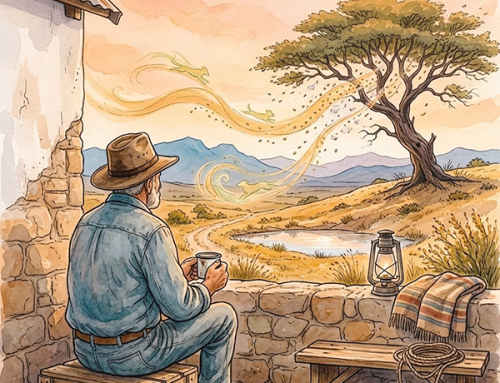
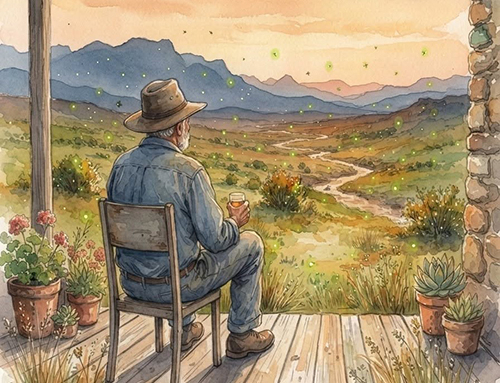
The last colour had long since drained from the sky, and the Swartberg stood black and silent against a deepening indigo, when Oom Koos, seventy four now and a little more bent than the year before, carried his chair out onto the stoep to watch for them.
He had learned, since that evening with the lig-kindertjies, to wait for the dark on purpose.
They came differently this time. Rising, small and quiet, out of the old windpomp beside the dam, out of the cracks in the kraal wall, out of the very dust of the yard itself, as though the earth had been holding its breath all day and only now, in the cool and the quiet, dared to exhale.
He called them, without quite deciding to in his Afrikaner tongue ”die ster-saaiers” (The star-sowers.)
They moved upward in loose, drifting handfuls, the way ash lifts from a veld fire long after the flames have gone, catching what little light remained and carrying it higher, past the reach of the Gwarrie trees, past the black shoulders of the mountain, into the deep well of the sky itself.
Oom Koos knew, the way a man knows the weather in his knees, that they carried more than ash.
He watched one small light hover near his shoulder a long moment, patient as an old dog waiting to be noticed, before it rose. And he understood, without being told, that it had been carrying something of his wife’s essence, some last unspent breath of her that had been resting in the soil near where her roses used to grow, and now it was time.
He lifted his hand, a farmer’s rough goodbye, and watched it go.
They worked like that for hours, lifting what remained of the day’s dead and dying, the moths who had lived their single night, the old ewe that had gone down in Attie’s east camp that morning, the quiet breath that had left old Miems in the town, two koppies over, and carried it all upward into the great turning wheel above.
And there, at the very top of the sky, where the Milky Way pours itself across the dark like spilled salt, they sowed it.
Oom Koos watched new light bloom where there had been only black before, faint at first, then steady, then burning the way only Karoo stars can burn, close and clear and endless.
He had stopped trying to understand most things, these last years. But he understood this much: nothing that rose that night came back down again empty.
The Little Karoo, he had always believed, kept its dead close, in the dry earth, in the dust, in the wind that carried a man’s voice further than his body ever travelled in life. But watching the ster-saaiertjies work, he began to wonder if the sky was simply another kind of Karoo soil, dark and waiting, ready to receive whatever the ground below had finished with.
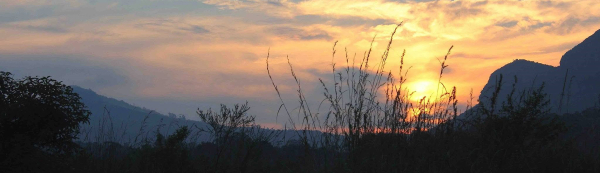
By the time the moon rose thin over the Swartberg, the work was done. The sky above the valley hung heavier with light than it had the night before, though no man could have counted the difference, only felt it, the way you feel a room fill with someone’s presence before you see them enter.
He never told anyone what he had seen. But some nights, at the very edge of dark, he swore he could still feel his wife’s hand on his shoulder, light as a star just lit, warm as a thing that has only just arrived.
There is something the Karoo sky has always known that we, in our grief, forget: nothing that rises is ever lost.
The dead stay close, they simply change address, poured upward into tiny light bodies that keep watch over the very ground that raised them, until the dark is ready to release them home again.
Energy transforms. It waits. It returns wearing a different shape, further away perhaps, but no less near.
That love, once given fully to a person or a place, continues past the last breath, rising into the dark and finding a shape bright enough to be seen from every corner of the valley they once called home.
A small comforting thought for you my love:
May you find your beloved one gone, transformed into light rather than absent from your life.
May you feel them as a star that changed shape, rather than a continued loss. May the small unexplainable things, the flicker at the edge of your window, the single star that seems to burn brighter than the rest, the warmth you feel beneath a clear night sky, remind you that love, once given, rises into the dark and remains forever dear, held within.
A treasured love that is always yours to carry, wherever you look up.
SharynAnn
The last colour had long since drained from the sky, and the Swartberg stood black and silent against a deepening indigo, when Oom Koos, seventy four now and a little more bent than the year before, carried his chair out onto the stoep to watch for them.
He had learned, since that evening with the lig-kindertjies, to wait for the dark on purpose.
They came differently this time. Rising, small and quiet, out of the old windpomp beside the dam, out of the cracks in the kraal wall, out of the very dust of the yard itself, as though the earth had been holding its breath all day and only now, in the cool and the quiet, dared to exhale.
He called them, without quite deciding to in his Afrikaner tongue ”die ster-saaiers” (The star-sowers.)
They moved upward in loose, drifting handfuls, the way ash lifts from a veld fire long after the flames have gone, catching what little light remained and carrying it higher, past the reach of the Gwarrie trees, past the black shoulders of the mountain, into the deep well of the sky itself.
Oom Koos knew, the way a man knows the weather in his knees, that they carried more than ash.
He watched one small light hover near his shoulder a long moment, patient as an old dog waiting to be noticed, before it rose. And he understood, without being told, that it had been carrying something of his wife’s essence, some last unspent breath of her that had been resting in the soil near where her roses used to grow, and now it was time.
He lifted his hand, a farmer’s rough goodbye, and watched it go.
They worked like that for hours, lifting what remained of the day’s dead and dying, the moths who had lived their single night, the old ewe that had gone down in Attie’s east camp that morning, the quiet breath that had left old Miems in the town, two koppies over, and carried it all upward into the great turning wheel above.
And there, at the very top of the sky, where the Milky Way pours itself across the dark like spilled salt, they sowed it.
Oom Koos watched new light bloom where there had been only black before, faint at first, then steady, then burning the way only Karoo stars can burn, close and clear and endless.
He had stopped trying to understand most things, these last years. But he understood this much: nothing that rose that night came back down again empty.
The Little Karoo, he had always believed, kept its dead close, in the dry earth, in the dust, in the wind that carried a man’s voice further than his body ever travelled in life. But watching the ster-saaiertjies work, he began to wonder if the sky was simply another kind of Karoo soil, dark and waiting, ready to receive whatever the ground below had finished with.
By the time the moon rose thin over the Swartberg, the work was done. The sky above the valley hung heavier with light than it had the night before, though no man could have counted the difference, only felt it, the way you feel a room fill with someone’s presence before you see them enter.
He never told anyone what he had seen. But some nights, at the very edge of dark, he swore he could still feel his wife’s hand on his shoulder, light as a star just lit, warm as a thing that has only just arrived.
There is something the Karoo sky has always known that we, in our grief, forget: nothing that rises is ever lost.
The dead stay close, they simply change address, poured upward into tiny light bodies that keep watch over the very ground that raised them, until the dark is ready to release them home again.
Energy transforms. It waits. It returns wearing a different shape, further away perhaps, but no less near.
That love, once given fully to a person or a place, continues past the last breath, rising into the dark and finding a shape bright enough to be seen from every corner of the valley they once called home.
A small comforting thought for you my love:
May you find your beloved one gone, transformed into light rather than absent from your life.
May you feel them as a star that changed shape, rather than a continued loss. May the small unexplainable things, the flicker at the edge of your window, the single star that seems to burn brighter than the rest, the warmth you feel beneath a clear night sky, remind you that love, once given, rises into the dark and remains forever dear, held within.
A treasured love that is always yours to carry, wherever you look up.
SharynAnn
Leave A Comment